What “Mystery Outbreaks” Teach Us About Public Health
by Syra Madad

When a deadly outbreak begins with an unknown cause, uncertainty can spread almost as quickly as disease.
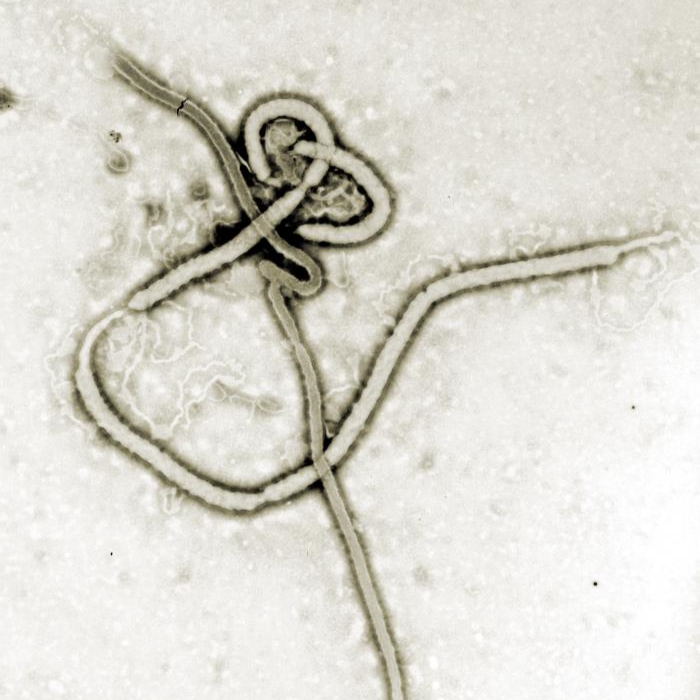
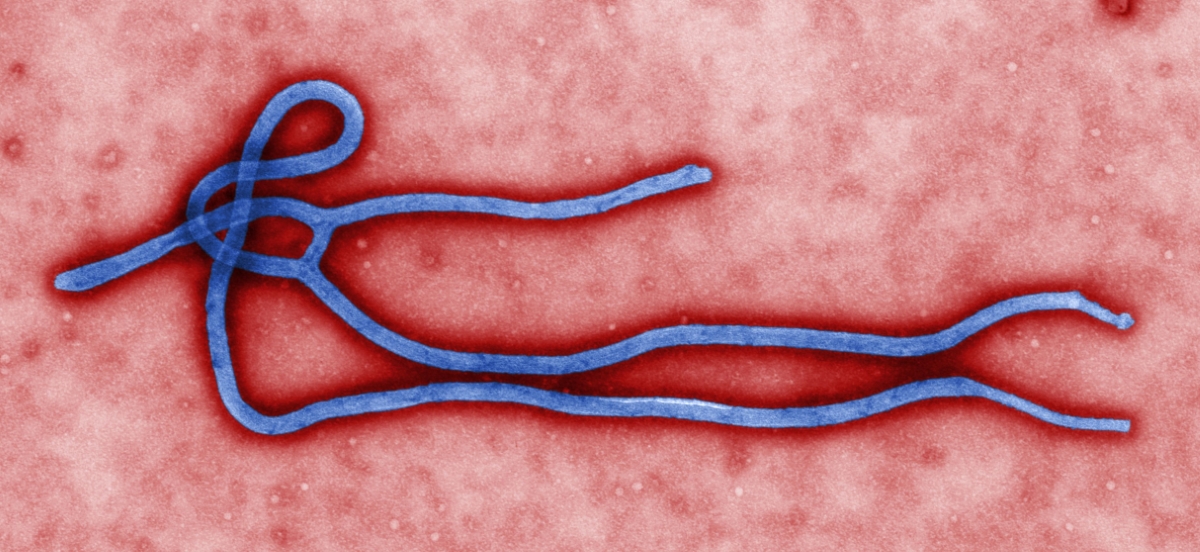
That uncertainty is now painfully familiar: in the Democratic Republic of Congo, an Ebola outbreak caused by Bundibugyo virus was declared in May 2026 after WHO was first alerted to a high-mortality “unknown illness” in Ituri Province. By mid-June, WHO reported over a thousand confirmed cases, deaths across multiple provinces, and a response complicated by delayed detection, insecurity, and diagnostic challenges.
The lesson is not simply that we need faster tests. It is that tests are only one part of outbreak intelligence. False negatives happen. Incidental positives can distract. Familiar diseases can mask unusual patterns. And sometimes, even after extensive investigation, the exact cause is never fully resolved. Yet public health action cannot wait for perfect certainty.
To better understand how public health experts investigate outbreaks of unknown cause and how the world should talk about them, I spoke with Freya Jephcott, PhD, a medical anthropologist and field epidemiologist specializing in emerging infectious disease surveillance and response systems. Dr. Jephcott is a Senior Researcher with the Centre for Pandemic Risk Management at the University of Cambridge and a Senior Lecturer in the Sydney School of Public Health at the University of Sydney. She also leads the Outbreak Ethnographies Project and has supported outbreak investigation and policy work for the World Health Organization and Médecins Sans Frontières.
For readers who are new to this topic, what is a “mystery outbreak,” and why do outbreaks of unknown cause draw so much attention from public health experts?
When people say “mystery outbreak,” they’re usually referring to what we call an outbreak of unknown aetiology. This is where we know some kind of public health event is occurring, but we don’t know what agent, or combination of agents, is causing it. It could be a virus, bacteria, fungi, parasite, prion, toxic agent, or even a nutritional crisis, radio-nuclear event, or some kind of psychogenic phenomenon. We just don’t know or can’t quite be sure.
Most of the attention they garner is probably borne from fears that they represent an outbreak of a novel or unfamiliar pathogen with pandemic potential. There are other reasons they attract attention, though. Not knowing the causative agent can make it harder to contain an outbreak and treat individual cases effectively. They are also just really interesting, and as such, pique the curiosity and imagination of public health professionals and laypeople alike.
You recently spoke about an undiagnosed illness in northern Burundi that reportedly sickened 35 people and led to five deaths. When an outbreak presents with severe symptoms but the cause remains unknown, how should public health officials and journalists communicate risk without causing unnecessary alarm or offering false reassurance?
It’s important that public health officials and journalists properly contextualize these situations when speaking about them publicly.
Most outbreaks of unknown etiology turn out to be caused by common or familiar pathogens, which happen to be presenting or behaving in an unusual way or were not detected during initial testing. This is especially true of those occurring in poorer, lower-latitude settings like Burundi, where there is a large existing burden of infectious diseases and limited resources available for investigation.
Regardless of whether it’s a familiar pathogen or something novel, most of these outbreaks will be self-limiting, naturally constrained by some ecological-cum-economic niche, or containable using generic public health interventions, such as increased hygiene measures and quarantine.
A lot of attention around mystery outbreaks is driven by fear of a novel, pandemic-prone pathogen. You’ve said one of the best ways to detect the signal of something new is to reduce the noise of endemic diseases such as malaria, shigella, and dengue. Why is that so important?
High burdens of endemic infectious diseases create a lot of “noise” when performing disease surveillance, making it hard to discern the “signal” of something unusual.
Part of the problem is that infectious diseases often present in very similar ways. A person with Ebola may have identical, or at least very similar, symptoms to someone with typhoid fever, shigella, or dengue. All of these conditions initially present with fever, malaise, and loss of appetite, and can cause hemorrhagic manifestations later in illness. Even toxic agents can have clinical overlap with them. During the 2014 West African Ebola outbreak, surveillance systems in a few countries picked up clusters of heavy metal poisoning cases in mining communities.
It can take quite a few cases for the more distinct patterns of symptoms and mortality associated with specific pathogens to become apparent. As rapid containment is so important when dealing with potential epidemics and pandemics, anything that causes a delay in detection is a significant problem.
Much of pandemic preparedness focuses on cutting-edge surveillance, novel diagnostics, and rapid pathogen detection. You make a case for “bread and butter public health.” What does that look like on the ground?
“Bread and butter” public health looks like adequate housing, ready access to soap and clean water, food security, educational opportunities, and well-stocked and staffed local healthcare facilities with feasible pathways to more advanced tertiary facilities. Essentially, all of the things we already know to be effective against an array of health concerns and feasible across a range of settings.
It also looks like adequately resourced and responsive local public health infrastructure. The presence of district disease control officers, or an equivalent local health official with epidemiological training, is a big one for me. They are the public health officials at the community interface who can identify, flag, and, to varying degrees, contain public health crises as they emerge.
For basic public health to prevail, though, communities need to be able to advocate for themselves and, to some degree, negotiate the conditions of their existence. The impact of political marginalization on the spread of disease, whilst widely understood in public health, often gets forgotten in the discourse around pandemic prevention.
You describe basic public health measures as a “two-for-one”: they reduce today’s endemic diseases and may also slow the spread of tomorrow’s novel threats. What are some practical examples?
Other than our degree of familiarity with them, novel and endemic pathogenic threats are drawn from the same pool. It seems extremely unlikely that a pathogen is going to suddenly present with some previously unknown route of transmission, meaning our generic infectious disease controls are likely to be effective.
For example, before we knew HIV was the virus responsible for AIDS, we knew that condoms were effective at preventing transmission and slowing the spread of the disease. And generic public health tools like masks, soap, and ventilation or air purification systems, which we routinely deploy against common infectious agents, will likely be effective against that much anticipated and feared novel influenza pandemic.
On a more fundamental level, a pathogen that finds itself in a disenfranchised, malnourished human population, residing in overcrowded housing with little hygiene infrastructure, and already saddled with a high burden of infectious diseases, is going to spread quickly and easily and be far harder to contain. The presence, or absence, of a functioning public health system will largely determine whether an outbreak peters out after a few cases or gains traction and realizes its epidemic potential.
When investigators are trying to understand an outbreak of unknown cause, what does the practical detective work involve?
The most pressing question when investigating an outbreak of unknown etiology is: “How are people contracting this illness?” This could mean identifying a particular source of infection or exposure — a contaminated well or doctored batch of pharmaceutical products, for example — or determining the primary routes of transmission, such as inhalation of aerosols or an insect vector. If we can get some clue as to how people are contracting the illness, we can intervene and curtail the outbreak.
There are a few ways outbreak investigators do this. The main way involves compiling information about individual cases into a file called a “line list.” This is then used to perform epidemiological analyses, including producing epidemic curves. The shape of an epidemic curve can tell you a lot about the nature and spread of an outbreak, including whether it is likely infectious, how long the typical incubation period is, and how many new cases each case typically seeds.
Investigators can also perform cohort and case-control studies, which can highlight important correlations and risk factors. They also conduct environmental investigations, though these are often underutilized in contemporary outbreak investigations.
Laboratory and field testing play an important role too. Knowing the specific agent responsible, or even just excluding some that aren’t responsible, is helpful. But it is not always necessary, and it doesn’t always provide the crucial information about how the disease is actually spreading.
What do recent outbreaks of unknown cause teach us about testing?
Testing is indispensable, but it is not infallible. In a 2018 review of 10 recent investigations into outbreaks of unknown etiology for WHO, several recurring issues stood out.
False negatives are more common than many people realize. They can result from the timing of sample collection, cold chain failures, user error, or a test that is not designed for the pathogen actually causing the outbreak. In the current DRC Ebola outbreak, early diagnostic challenges appear to have reflected, in part, the difficulty of detecting Bundibugyo virus with tools better suited to other Ebola species. CDC has noted that the current outbreak is caused by Bundibugyo virus in DRC and Uganda, while WHO has described the outbreak’s initial presentation as a high-mortality unknown illness before laboratory confirmation.
Incidental positives are also common. In many outbreak investigations, laboratory results may identify multiple agents that plausibly fit the clinical picture. A few malaria-positive tests during a febrile illness outbreak in a malaria-endemic area, for example, should not be enough to declare the outbreak solved.
Investigators also have more testing strategies available than they may initially use. Targeted testing matters, but non-specific or broader approaches — including multiplex PCRs and metagenomic sequencing — can be valuable when the clinical picture is unclear.
And sometimes the causative agent is never identified. That cannot become an excuse for inaction. A rough understanding of the source or route of transmission is often enough to begin effective interventions: contact tracing, PPE, safer care practices, water and sanitation measures, or community-based risk reduction.
Many mystery outbreaks occur in places already carrying a high burden of familiar infectious diseases, while also drawing global attention because of pandemic concerns. How can the global health community avoid treating lower-income countries mainly as early-warning systems for the rest of the world?
It seems perverse to justify reducing the burden of diarrheal diseases in places like Burundi solely, or even primarily, on the grounds that it would help protect some far-off, wealthier foreign population against a hypothetical future pandemic. That it is one of the largest killers of children under five should be motivation enough.
Discourse around epidemic- and pandemic-prone diseases seems to be almost exclusively caged in the terms of global catastrophic risks and the protection of “Northern” interests. The discussions of equity and rights that have started to gain traction in global health more broadly assumedly coming off the back of more serious engagement with questions of epistemic justice do not seem to have found much cachet in this securitization-obsessed environment. So the idea that appeals to compassion and solidarity might somehow be compelling to this audience seems quixotic.
But I think that’s wrong. I think public health professionals, including myself, should give such motivations prominence in our justifications for tackling infectious disease burdens in these settings. I think we might find that such notions do have traction within the wider epistemic community, and amongst pandemic-prevention policymakers and the general public.
Closing
Mystery outbreaks test more than laboratory capacity. They test humility, communication, trust, and the strength of everyday public health systems. The goal is not only to name the pathogen faster, though that matters. It is to act wisely amid uncertainty, reduce the conditions that allow outbreaks to flourish, and remember that the communities most affected are not merely sentinels for the rest of the world. They are people deserving safety, care, and sustained investment now.